
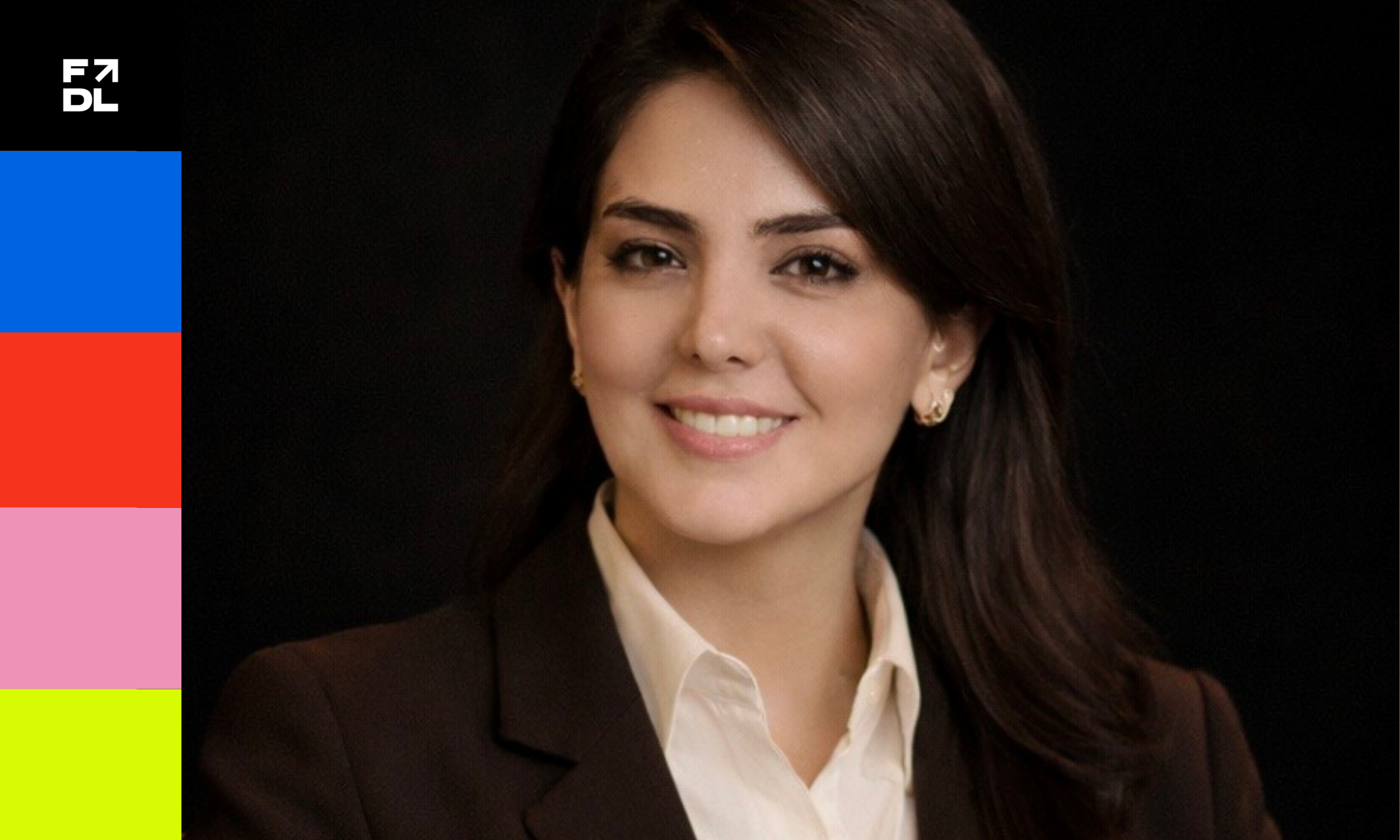
After years studying innovation and startup ecosystems, Fahimeh Zamani kept seeing the same problem: talented people were not short on ambition, but access to the right person at the right moment could change everything. With Metalk, she is building a different model for mentorship, starting with women in tech and entrepreneurship.
Fahimeh Zamani has spent much of her career thinking about how innovation happens.
With a PhD in Technology Management and a background in innovation research, she has studied the ecosystems around startups: how ideas develop, how entrepreneurs grow, and what helps promising ventures move forward.
But the longer she spent around those ecosystems, the more one gap stood out.
Talented people were everywhere. Access was not.
The right advice, introduction or experienced perspective could completely change someone's trajectory. Yet finding that person often depended on geography, existing networks, or simply being lucky enough to know whom to ask.
For Fahimeh, observing the problem eventually stopped being enough.
“I realised that many talented people struggle to access the right guidance, networks and opportunities at the moments they need them most.”
That realisation became part of the impetus for Metalk, a mentorship platform focused on making meaningful guidance more accessible, particularly for women in tech and entrepreneurship.
From studying ecosystems to building within one
Moving from research into entrepreneurship might look like a natural progression. In practice, the two demand very different things.
Research rewards investigation. Entrepreneurship eventually requires a decision.
Fahimeh had spent years developing the skills to examine problems, seek evidence and understand systems. Building a company meant learning when to stop analysing and start testing.
It also put her on the other side of many of the questions she had spent her career studying.
What do people actually need? Which assumptions hold up outside a research setting? How do you build something useful when the evidence is still incomplete?
For Fahimeh, the answer has been to stay close to the people she is building for.
“As a researcher and entrepreneur, I enjoy exploring new ideas, listening to different perspectives, and making data-informed decisions.”
That instinct still shapes how she works. The difference is that the feedback loop is now immediate.
Build. Listen. Learn. Adjust.
Rethinking access to mentorship
At its simplest, Metalk connects mentees with mentors who can support their professional and entrepreneurial growth.
But Fahimeh is interested in a harder question: what makes a mentorship relationship genuinely useful?
There are already plenty of ways to meet people online. A connection alone does not necessarily create value.
“What sets us apart is our focus on creating meaningful, human-centred connections rather than just facilitating introductions.”
Metalk is designed around that distinction. Mentees can identify their goals and the kind of support they need, find relevant mentors and book conversations through the platform. The ambition is to make those relationships easier to start, while creating enough structure for them to become useful over time.
The platform is currently in beta, with Fahimeh and her team building and testing the model as they grow its mentor community.
Their longer-term ambition is bigger: to reduce some of the financial and network barriers that determine who gets access to high-quality mentorship in the first place.
Building a different mentorship economy
One of Metalk’s more experimental ideas is its approach to rewarding mentors.
The team is developing MET, an internal reward system designed to recognise mentors for the value they contribute. Rather than treating mentorship simply as another hourly consulting service, the model considers factors including time invested, repeat relationships, feedback and mentee progress.
For mentees, the aim is to keep the cost of accessing support low.
For mentors, it is an attempt to answer a question that sits at the heart of many community-driven platforms: how do you make expertise accessible without treating someone's time as if it has no value?
It is an ambitious model, and one the team is still developing.
That willingness to experiment reflects Fahimeh’s background. Metalk is not simply a product she is launching. In many ways, it is a hypothesis she is testing about how access, incentives and human relationships can work differently.
Learning to build without certainty
For someone trained to investigate before drawing conclusions, entrepreneurship has required becoming comfortable with something research can never completely remove: uncertainty.
“One of the biggest challenges I faced as a founder was navigating uncertainty while building something new without a clear roadmap.”
There was no study that could tell Fahimeh exactly what to build next. No dataset that could guarantee a decision would work.
So she developed another approach.
Stay close to users. Test ideas early. Create feedback loops. Make the best decision available, then learn from what happens next.
Over time, uncertainty became less something to solve and more something to work within.
Small iterations provided information. Information created clarity. And clarity made the next decision easier.
The team is the company
Ask Fahimeh what she would tell her younger self and her answer is strikingly specific:
“Your team members are 99% of your success.”
Metalk itself reflects that belief.
Fahimeh is building the company alongside Afrooz Bahrami, Sodabeh Akbari and Fereshteh Hamidi, an Iranian-Dutch founding team whose backgrounds span innovation, growth, community-building and technology.
Their different strengths matter because Fahimeh does not see entrepreneurship as an individual exercise.
The product they are building is ultimately about the same thing: progress rarely happens entirely alone.
Sometimes what changes the direction of a career or a company is simply having the right person beside you at the right moment.
Progress over perfect conditions
Fahimeh returns often to a simple idea:
“Start where you are. Use what you have. Do what you can.”
It is a useful mantra for someone whose founder journey has involved moving from studying how things work to accepting the messiness of building something herself.
She finds motivation in small iterations rather than dramatic breakthroughs. Creativity comes from learning and encountering different perspectives. Resilience comes from reflection, feedback and treating challenges as information.
“Building meaningful things is a continuous process, and consistency matters more than having perfect conditions from the start.”
For Fahimeh, that may be one of entrepreneurship’s biggest lessons.
You rarely have all the information.
You rarely have perfect conditions.
You begin anyway.
Why Founderland matters
That same belief in the importance of people is part of what draws Fahimeh to Founderland.
“Being part of Founderland means being part of a community that truly understands the challenges and opportunities of building as a founder.”
She sees the community as a place for shared learning, support and access, but also as somewhere she can contribute what she has learned herself.
For a founder building a company around the value of meaningful connections, there is an obvious symmetry.
Because behind Metalk is a conviction Fahimeh has carried from research into entrepreneurship: talent alone is rarely the whole story.
People also need access.
They need knowledge.
And, sometimes, they need one person who can help them see the next step.
Follow Fahimeh’s Journey
Stay in the loop: